

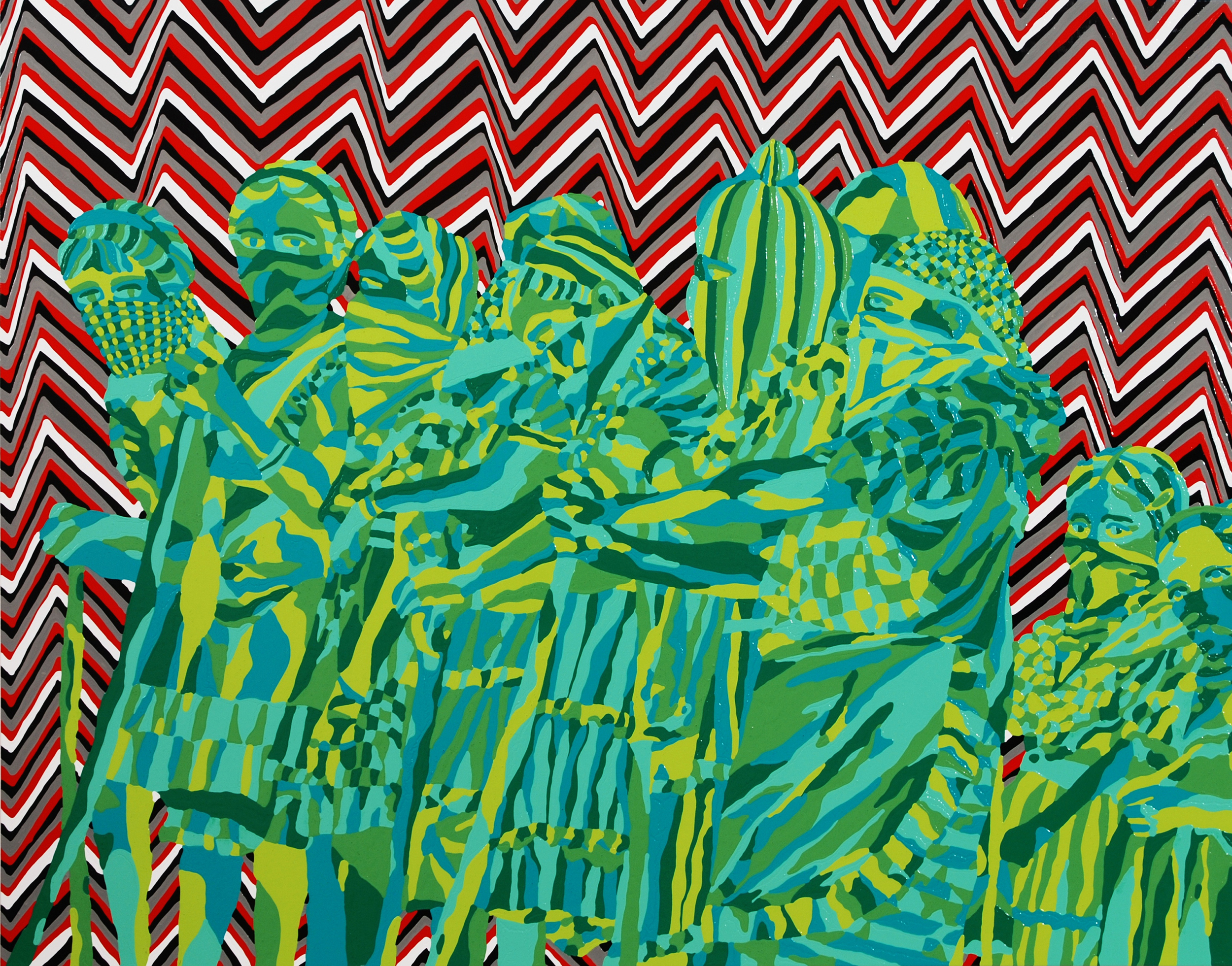
Image: Jemima WYMAN Combat 06 2008, poured acrylic on canvas, 168 x 213 cm. QUT Art Collection. Donated through the Australian Government's Cultural Gifts Program, 2024.
This work is acrylic on canvas, measuring 1.68 metres high and 2 metres wide and was donated to the QUT Art Collection through the Australian Government’s Cultural Gifts Program in 2024.
Working from left to right is a group of figures, ten in total, eight of the figures are larger than two smaller figures, perhaps children positioned behind the eight figures in the bottom right-hand corner. The figures are viewed from the side and presented in side profile facing left and all of the figures wear scarves across their noses and mouths concealing the bottom half of their faces. The majority of the figures look off into the distance with the exception of four, two figures on the far left and the two children in the right bottom corner. These figures stare directly out towards the viewer with both eyes shown.
All of the figures are covered in highly decorative patterns of coloured paint in lurid green and dark green and light and bright blue reminiscent of the Disruptive Pattern Material or DPM commonly found in military uniforms used to camouflage soldiers. Horizontal and vertical stripes and a chequerboard pattern are also employed in the colours of blue and green, with lurid green undertones.
Across the top of the painting from left to right, and behind the figures, is a contrasting zig zag pattern of alternating lines of colour: black, grey, red and white creating a busying effect.
Against the flat figures in different shades of green and blue the picture appears to swell and move. The high contrast colours of the background and the figures creates a sense of movement within the work with the figures and the background shifting and clamouring to command the space which provides an optical illusion reminiscent of Op Art, a movement popular in the 1960s where artists employed shape, colour and pattern to play with the viewer’s perception.
The Zapatistas, a socialist liberation army composed largely of Indigenous peoples of Mexico, inspired the Combat drag series of which Combat 06 is a part. Twenty years ago, the Zapatista Army of National Liberation started a rebellion in response to the implementation of the North American Free Trade Agreement and to fight for the rights of Indigenous Mexicans.
In the state of Chiapas and throughout Mexico, traditional gender and sexual norms have long held sway, making the Zapatistas a progressive force in terms of women’s rights. Women have become increasingly involved in the Zapatista movement, taking on roles such as officers and spokespeople.